Lucky Charms
In the largest church in Verona, the basilica of Saint Anastasia, there are two marble fonts by the entrance. The round basins, one dating from 1491, the other from exactly a century later, are placed on the backs of two gobbi, two hunchbacks. It has become customary to touch one of the gobbi for good luck. In fact, in Italy a hunchback was a common and powerful symbol for good fortune, usually depicted in smart clothes and adorned with other lucky charms.
These gobbi are a reminder that there is more to good luck than horse shoes and four-leaf clovers and that there is a lot of cultural variation when it comes to charms and symbols of fortune.
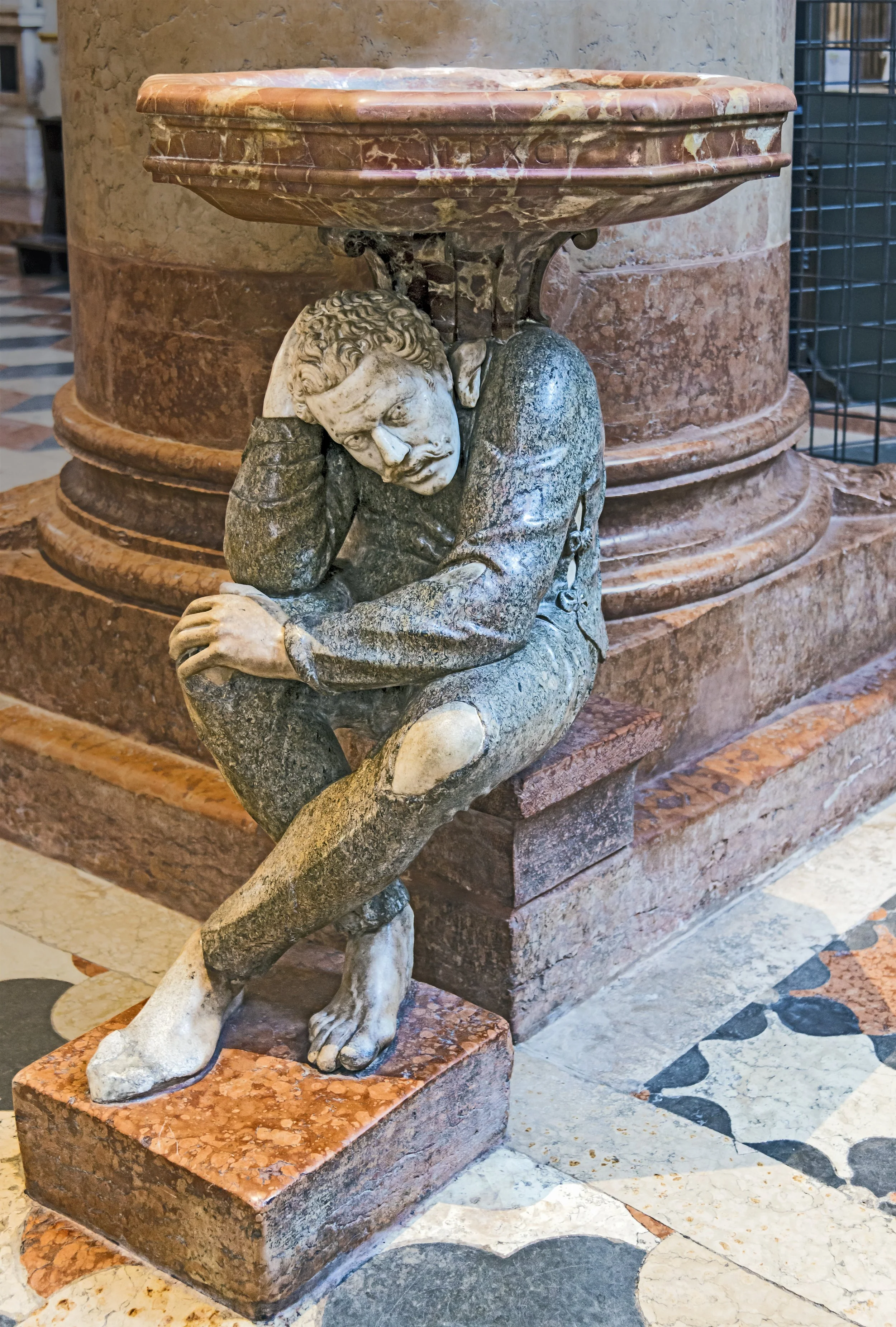
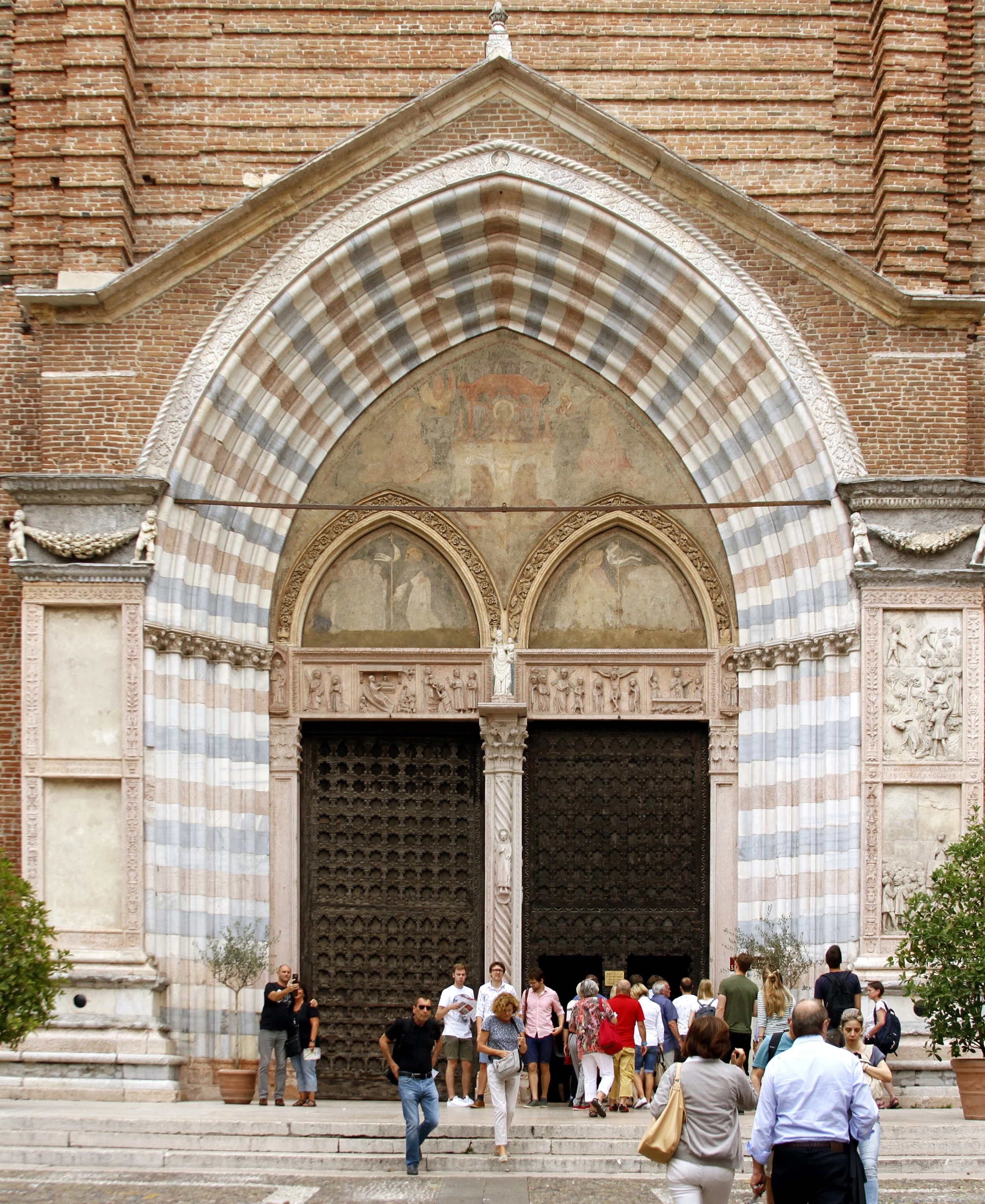
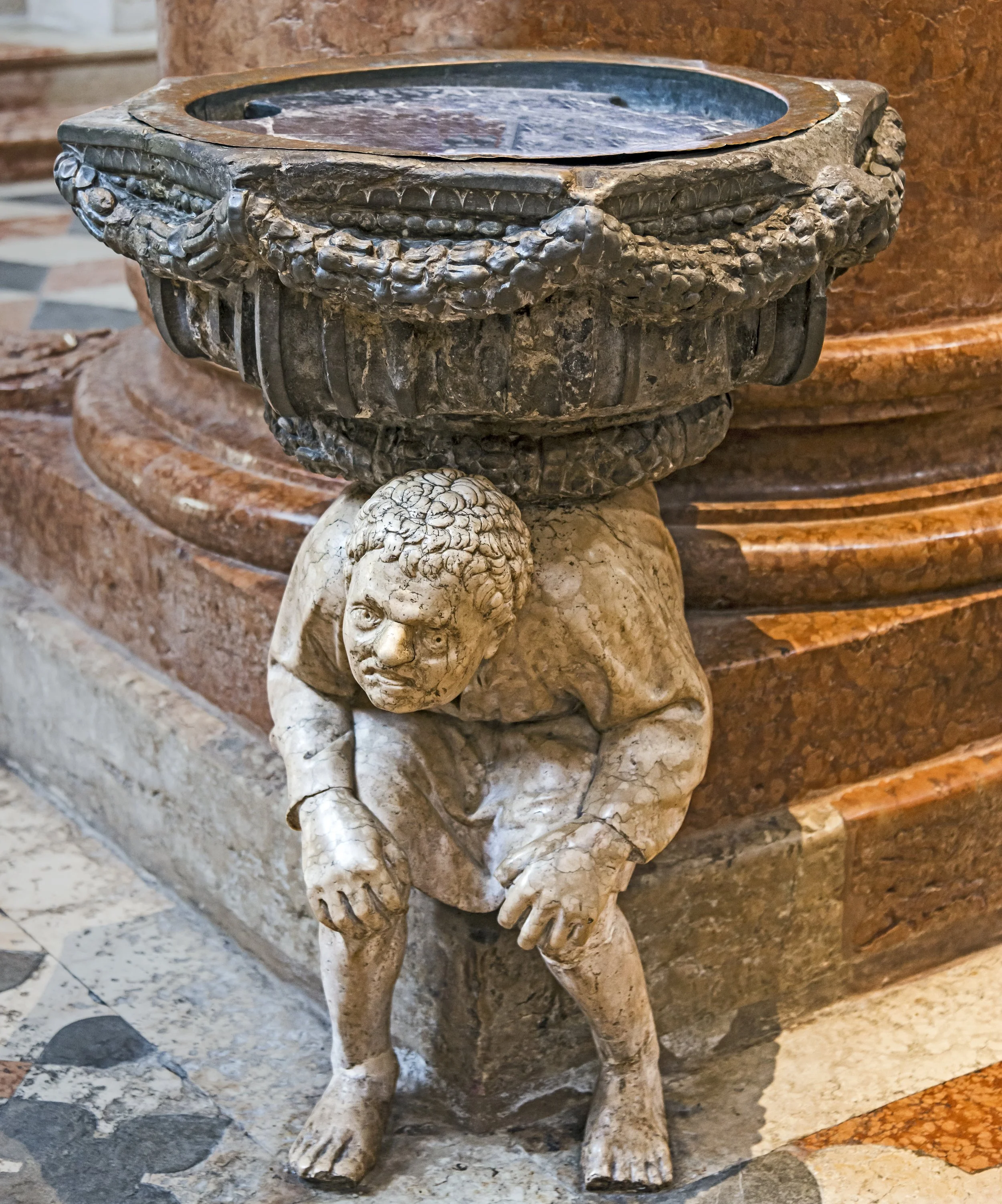
From right to left: The font from 1591, carved by Paolo Orefice, photographed by Didier Descouens (CC BY-SA 4.0). The portal to the basilica of Saint Anastasia, photograph
© José Luiz Bernardes Ribeiro. The font from 1491, carved by Gabriele Caliari, photographed by Didier Descouens (CC BY-SA 4.0).
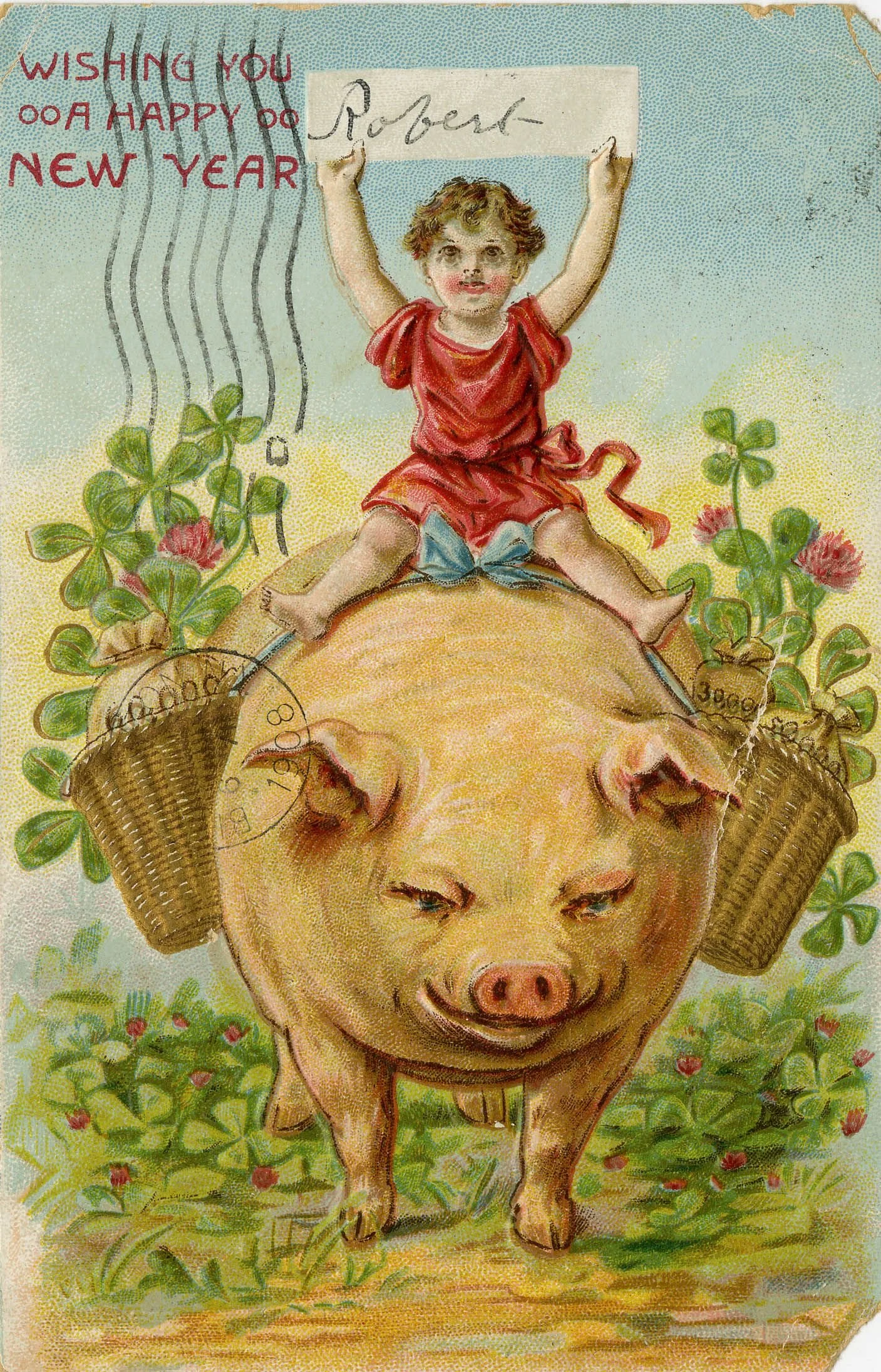
In German speaking regions, the Glücksschwein and Glückspilz, lucky pig and lucky mushroom, are some of the most common Glücksbringer, literally “bringers of luck”. The mushroom, not just a plain brown one but a jolly red toadstool speckled with white dots, is a rare and cheerful sight in a forest, and was a practical find too - this type of fungus was traditionally used to deter flies from coming into the home. The association of pigs with good luck and fortune is less prominent in the anglophone world today, but it helps explain why we give children “piggy banks” as opposed to another design of money box.
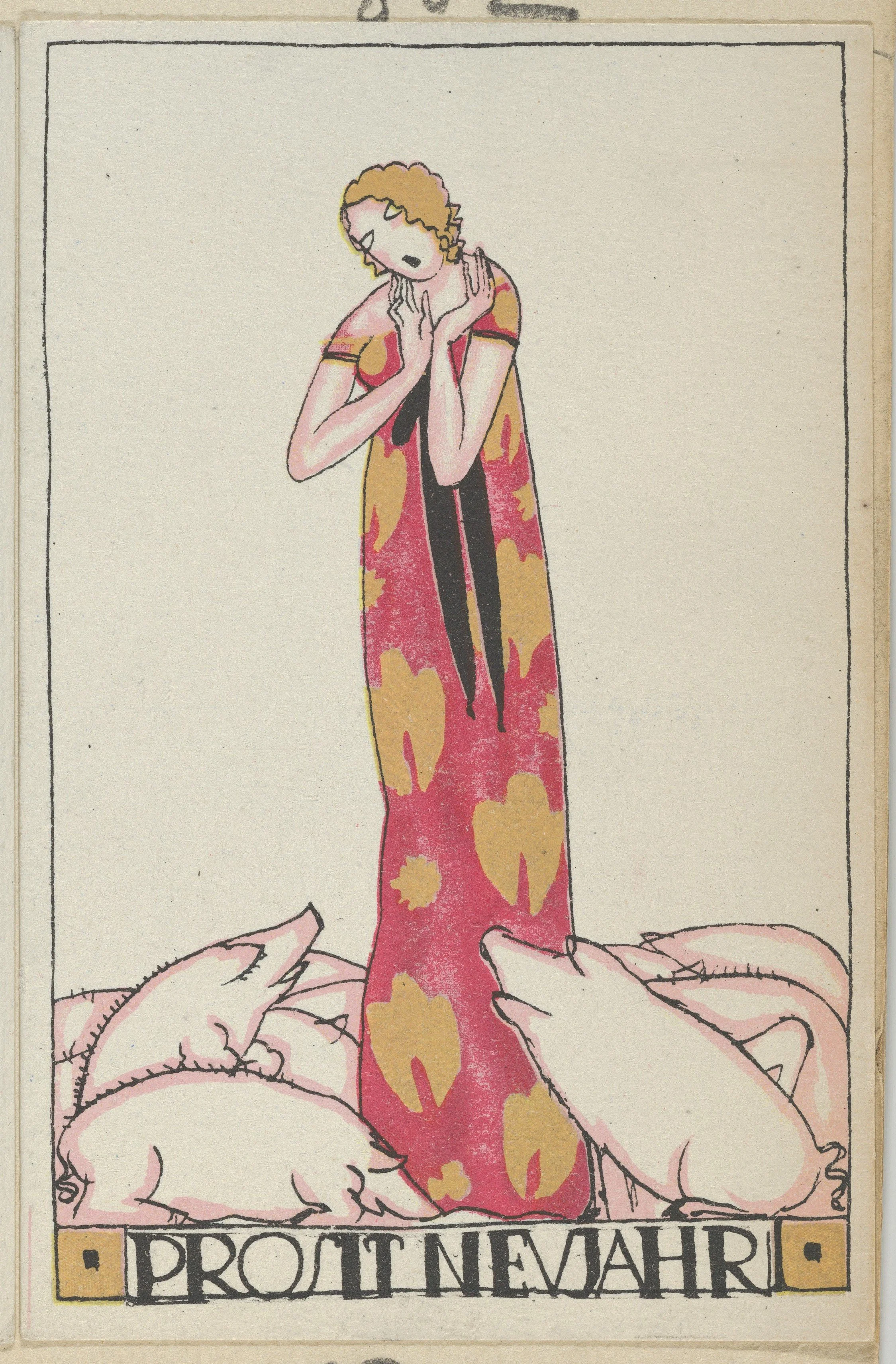
Left: Postcard designed in 1912 by Arnold Nechansky for the Wiener Werkstaette. The text reads “Prosit Neujahr” meaning Happy New Year. In the collection of the Metropolitan Museum of Art, New York.
Right: An American postcard from 1908. Both images available via Wikimedia Commons.

This was painted by Arthur Thiele, a German illustrator who produced many postcard designs. The caption refers to being lucky in the new year, both in games and in life.
Ladybirds are another common good luck charm in several European traditions, perhaps because of a legend connecting the insect to the Virgin Mary. In many languages the link between the insect and Mary is even more obvious than in English: in German Marienkäfer (Mary’s beetle), in Spanish Mariquita (little Mary) in Danish Mariehøne (Mary’s hen).
These names originate from the Middle Ages, when several stories associated the creature with Mary. Some stories related closely to biblical events, such as the tale that during the crucifixion a ladybird was stained red with a drop of blood from Mary’s finger, pricked by a rose thorn. Others are further removed, such as the idea that peasants prayed to Mary to protect their crops, and she answered their prayers with ladybirds.
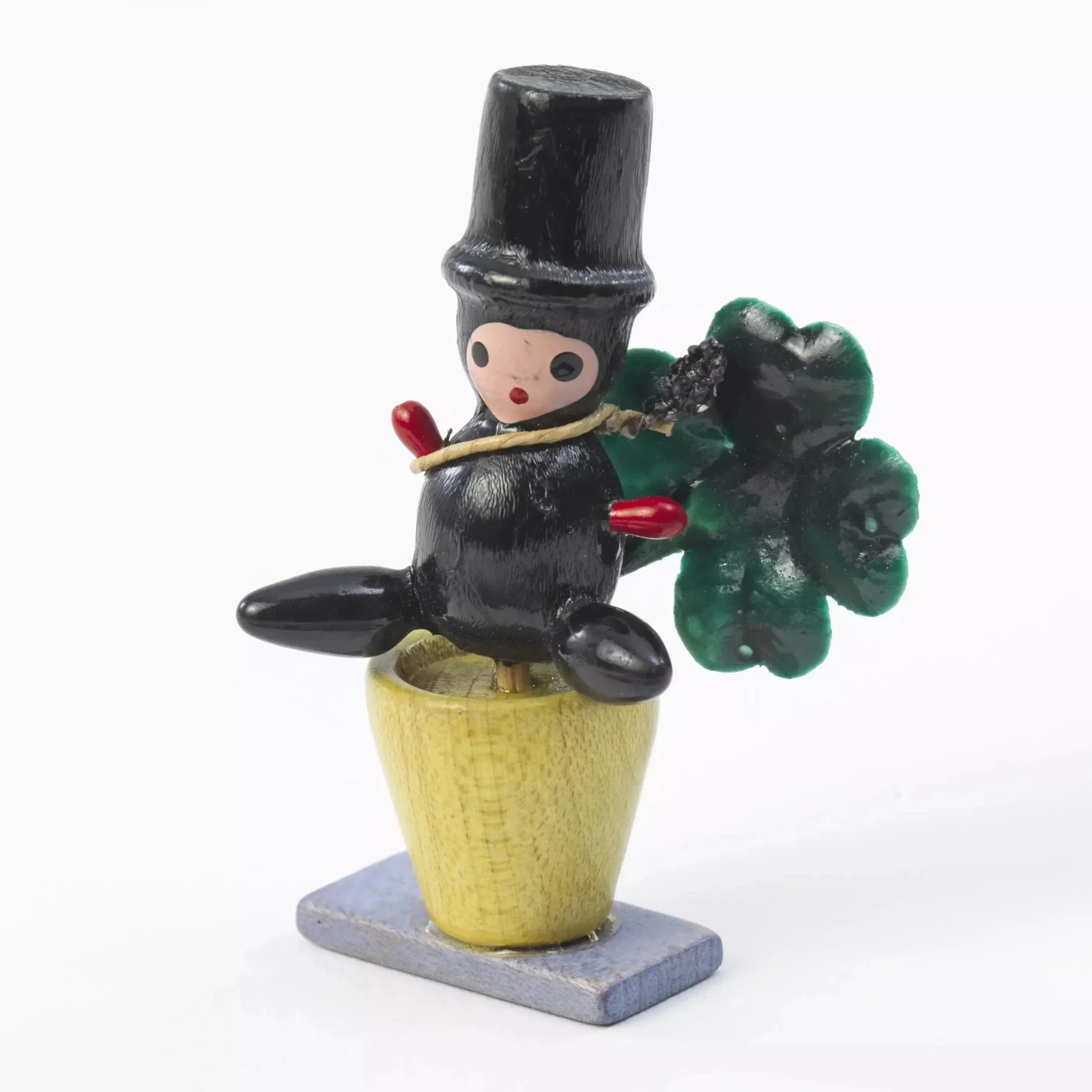
Chimney Sweep Lucky Charm
Small charms like this are traditionally traded at New Year, this late 20th century example comes from Austria and is in the Wien Museum, photograph by Birgit und Peter Kainz.
Finally, the chimney sweep is a figure which still stands for luck in many European regions today, certainly in German speaking regions new year greetings are often sent with depictions of chimney sweeps, representations of cleanliness, safety and preparation. While the chimney sweep is no longer a common symbol for luck in the UK, a legend tells that a chimney sweep once came to the aid of King George III when his horse got spooked during a procession, and in gratitude the King declared that chimney sweeps should be well regarded. It is a notion that is referred to in Mary Poppins, when Bert sings his song on the rooftops and declares: “Chim chiminey, chim chiminey / Chim chim cher-oo! / Good luck will rub off when / I shakes 'ands with you”
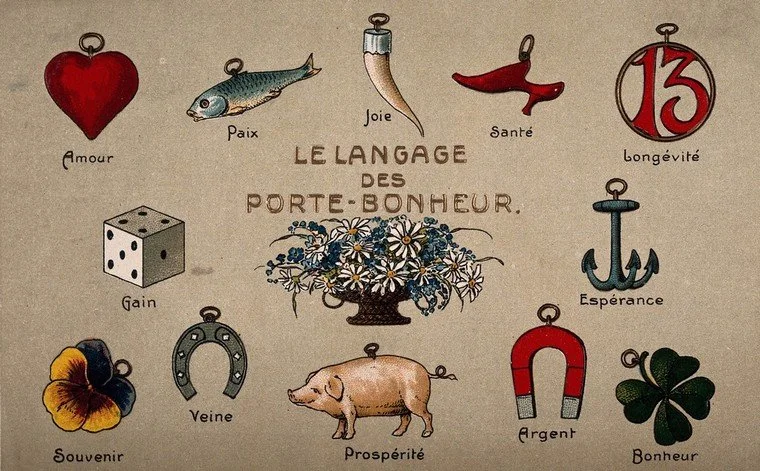
Le Langage des Porte-Bonheur
And if the hunchback, pig, mushroom, ladybird or chimney sweep do not appeal, there are more options still on this postcard: Le Langage des Porte-Bonheur, the language of lucky charms.
Image from the Wellcome Collection’s digital catalogue.