The Coral That Breathes
In the 1470s, the Italian painter Piero della Francesca (from Sansepolcro in Tuscany) produced several Madonna and Child paintings for eminent patrons. In several of them he placed a coral necklace around the neck of the infant Christ. Each necklace followed the same format: a string of spherical beads and a pendant made from a coral branch.
Coral was highly prized in Italy during the Renaissance and was thought to ward off evil, leading to the tradition of children being given talismans made of coral for protection. Since medieval times artists had occasionally depicted the infant Christ with a coral necklace, and it was a tradition Piero della Francesca upheld not just in the Madonna di Senigallia (below left) but also his Brera Madonna (below right), both painted in the 1470s, as well as other versions now in private collections.
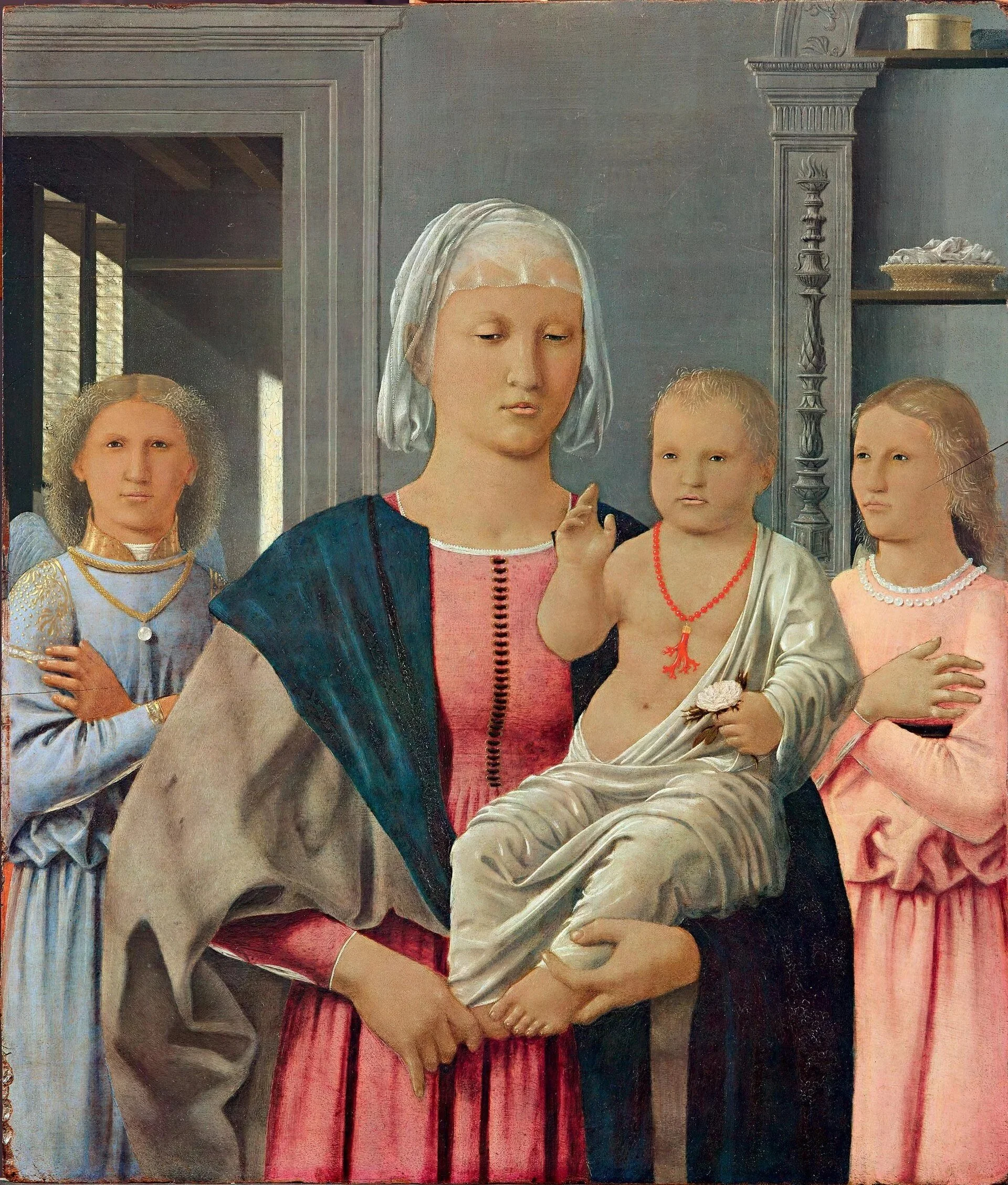
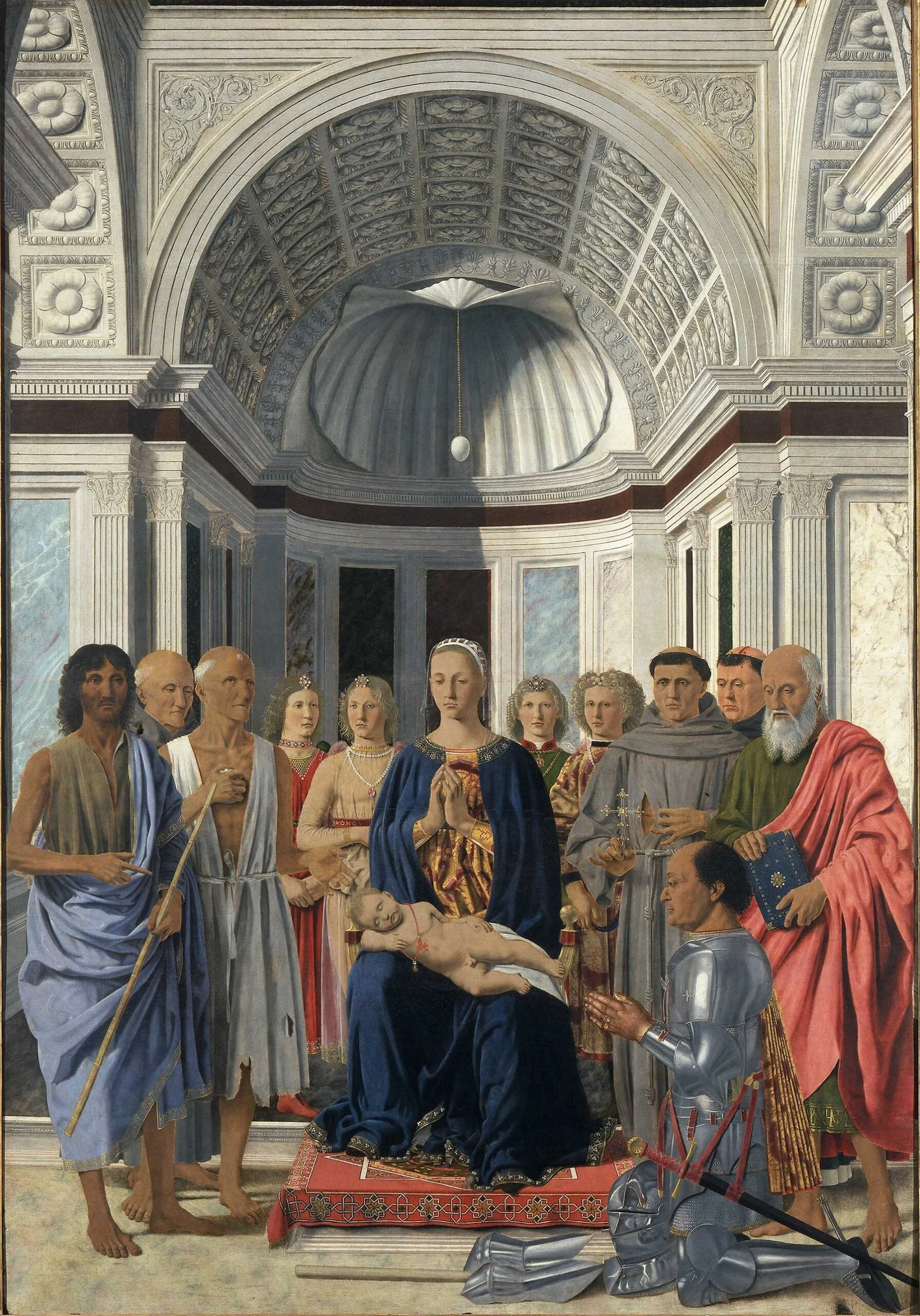
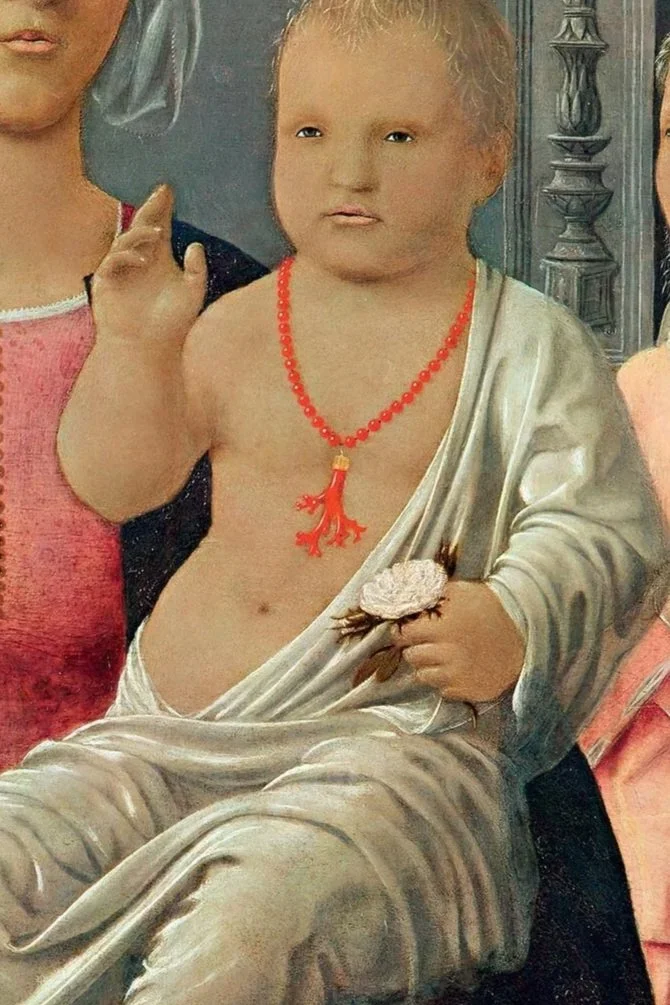
Coral necklace around the Christ child in the Madonna di Senigallia, painted by Piero della Francesca in 1474.
Taking a detailed look at the coral necklaces which appear in these two paintings, the art historians Marilyn Aronberg Lavin and Miriam Redleaf observed that in both paintings the branch of coral bears a close resemblance to the human pulmonary tree, which is made up of the trachea, or wind pipe, and two main bronchi, which then divide into progressively smaller airways, ultimately ending in the lungs' tiny air sacs. Consdiering that natural coral grows in a number of shapes and patterns, and Piero della Francesca could have painted it in any way he liked - these consistent choices seem meaningful, especially considering the physical placement of the pendant on the chest, where the windpipe and lungs reside.
By shaping the coral into a part of the human breathing apparatus, Piero della Francesca not only reveals his knowledge of anatomy but also gives this object another layer of religious symbolism.
In biblical Hebrew the word used for breath Ruach (רוּחַ)is the same word as used tor spirit, and to describe wind in a more general sense. The same word is used for the wind that parts the sea, the breath in a person's chest, and the Spirit of God moving over the waters at the very start of the Book of Genesis. It’s a usage that reflects how moving air, physiological breath and divine spirit were all understood as the same phenomenon by another name. Wind is invisible, but its effects are everywhere to see, just like those who believe in a deity have no tangible image of it, but feel its effects. Breath is invisible too, but its presence or absence is the clearest evidence there is of whether a person is alive.
Breath, in other words, was the natural bridge between the visible, physical world and the unseen animating force behind life itself, and Piero della Francesca's coral is a perfect illustration of it. Shaped like the very organ that turns air into life, and hung on the body of an infant whose death and resurrection the whole painting quietly anticipates, it becomes a talisman not just against harm in general but specifically to protect breath, indeed life itself.
It's a detail easy to miss in a large and otherwise very quiet painting, but it rewards close looking: a piece of jewellery that turns out to be anatomy, that turns out to be theology, that turns out, in the end, to be reaching for the same thing every culture seems to reach for when it tries to explain what makes us alive - that intangible “spirit” of life.
The next issue of Artful Magazine will be inspired by the theme of air: click here to subscribe.